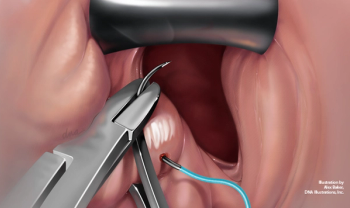
A family history of uterine cancer prompted the patient to seek a hysterectomy.
A family history of uterine cancer prompted the patient to seek a hysterectomy.

Readers write in about their thoughts on Contemporary OB/GYN's coverage of the maternal mortality issue, urge the avoidance of politicizing issues, and argue for the reduction of cesarean deliveries.
The U.S. Food and Drug Administration (FDA) has done women a disservice by incompletely examining the evidence for risk and benefits associated with morcellation for women undergoing surgery for suspected fibroids. Of note, within days of the FDA report, the Agency for Healthcare Quality and Research (AHRQ) of the US Department of Health and Human Services published a more rigorous and complete analysis of available data with entirely different results and conclusions. Thirty-six signees recommend that Contemporary OB/GYN’s readers review the AHRQ findings and decide which report serves women best.
Dr. James Greenberg gives his review of the LiquiBand Exceed Topical Skin Adhesive.

Two physicians recount their experiences of losing a patient.
From our own experience in academic medicine, Dr. Ed Funai and I can vouch for the fact that most medical students are going into medicine for the right reasons-to help others via a career wedded in both science and humanity. Ironically, those same medical students are also experiencing record levels of burnout, substance abuse and depression as they enter their third and fourth years.
The purpose of this article is to review the steps in a cesarean delivery and examine the best available evidence for performing the procedure.
Findings from a recent study indicate that trimethoprim 200 mg BID for 3 or 7 days is the most effective antibiotic for uncomplicated urinary tract infection (UTI) when levels of local resistance to the drug are < 30%. However, when it is ≥ 35%, a single dose of fosfomycin 3g or nitrofurantoin 100 mg BID for 7 days is more cost-effective.
In a Swiss comparative trial, diclofenac was found to be inferior to norfloxacin for treatment of urinary tract infection (UTI).
An analysis of data from the National Immunization Survey-Teen (NIS-TEEN) 2015 shows that parental concerns about human papillomavirus (HPV) vaccination are gender-specific.
Results of a randomized clinical trial (RCT) suggest that over-the-counter moisturizer may be just as effective as vaginal estrogen tablets for treatment of vulvovaginal symptoms (VVS) in postmenopausal women. Plus: Does a Mediterranean diet help protect bones in postmenopausal women? Also: Metformin, an oral diabetes medication, seems to reduce the likelihood of late miscarriage and premature birth in women with polycystic ovary syndrome (PCOS), according to results of a multicenter study.
Failure of liquid nitrogen storage tanks at two major infertility centers has led to a review of procedures at those and other similar facilities by them and the American Society for Reproductive Medicine (ASRM). Plus: Does MHT affect cardiovascular health? Also: Hirsutism treatment and diagnosis updated.
Women who smoke cigarettes may be more susceptible to urogenital infections and have more vaginal malodor, according to a cross-sectional study.
Allegations in this case include extended use of oxytocin and allowing labor to continue too long.
The aim of this paper is not to outline a specific medical-surgical algorithm for managing PPH, but rather to give an overview for system-wide preparedness that should be considered in planning to mitigate this frequent, potentially life-threatening, obstetrical emergency.
Planning up front for an endoscopic gynecologic surgical procedure is the best way to prevent an injury or complication.
Roughly one of two Ethiopian women were found to have bacterial vaginosis (BV) that strongly correlated with personal hygiene, according to a cross-sectional study.
Interim data from two studies of a dapivirine vaginal ring-DREAM and HOPE-lend further credence to the potential benefits of using the device for HIV prevention. Plus: FDA authorizes direct-to-consumer BRCA1/BRCA2 test. Also: A new Zika virus test extends window for accurate diagnosis.
A collection of standards, guidelines, tools and articles for the OB managing postpartum hemorrhage.
In the second part of Dr. Lockwood's editorial on opioids, he discusses steps that ob/gyns can take to help limit opioid use disorder in our pregnant and non-pregnant patients.
A newly published pilot study is the first to show that the selective estrogen receptor modulator (SERM) ospemifene effectively normalizes vestibular innervation sensitivity, in addition to confirming that it relieves postmenopausal vestibular signs and symptoms.
Dyspareunia is a common female health problem, according to a large British population probability survey, affecting 7.5% of sexually active women.
James Greenberg, MD, reviews the LaparoVue Visibility System, a single-use, disposable system designed to eliminate fogging while cleaning laparoscopes and trocars during a procedure.
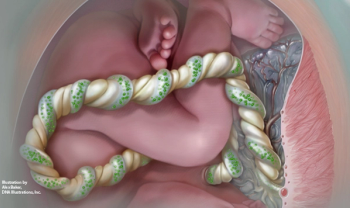
Ob/gyns are on the front line of the opioid epidemic and have a responsibility to recognize, treat, refer, and advocate for pregnant women with opioid use disorder.
In large part, clinicians and patients do not see eye to eye when it comes to what they consider important criteria for a rating scale assessing female sexual desire, according to a literature review
According to a literature review, apart from the essential role that sex hormones play in modulating hypoactive sexual desire disorder (HSDD) through therapeutic interventions, a comprehensive understanding of the biologic mechanisms underlying the disorder is imperative.
According to research, the size of a woman’s hips and waist may be the best indicators of her risk of a heart attack. Plus: Adverse risks of pregnancy over 40. Also: Active surveillance of CIN2 is a viable treatment, according to a study.
In a new statement, the US Preventive Services Task Force (USPSTF) is recommending against ovarian cancer screening for women who have no symptoms and no hereditary cancer syndromes. Plus: Breast MRI screening results in higher biopsy rates, according to a study.
A lower-dose estradiol vaginal cream than is currently available in the United States was an effective and well-tolerated treatment for dyspareunia in postmenopausal women, according to a recent phase 3, randomized, multicenter, double-blind, placebo-controlled trial.
Higher levels of distress were linked to increased vaginal sexual symptoms, worry about dyspareunia, dissatisfaction with a relationship, and concerns about body image in a study looking at sexual well-being among cervical cancer survivors.