

Conference Coverage
Trending on Contemporary OB/GYN
1
Neurokinin receptor antagonists improve menopausal sleep disturbance
2
TMS 2026: HSDD biopsychosocial approach, night sweats red flags, misread WHI data
3
Brain fog at menopause: Separating normal change from dementia
4
Stephanie Faubion, MD, on the first menopause therapy discussion
5
How misread WHI data reshaped menopause care and training
Latest News











Advertisement
Shorts

0:28
Healthy habits over hype: Longevity counseling in practice
3 days ago
by
Jan L. Shifren, MD, MSCP
0:32
JoAnn Pinkerton, MD, on 50% VMS frequency reduction with elinzanetant
3 days ago
by
JoAnn V. Pinkerton, MD(+1 more)

0:27
Considerations when prescribing fezolinetant and elinzanetant
3 days ago
by
Stephanie S. Faubion, MD, MBA, FACP, MSCP, IF(+1 more)

0:41
JoAnn Pinkerton, MD, on elinzanetant's sleep improvements
4 days ago
by
JoAnn V. Pinkerton, MD(+1 more)

1:04
When night sweats signal something more serious
4 days ago
by
Cheryl Cox Kinney, MD, FACOG, MSCP

0:59
Stephanie Faubion, MD, on elinzanetant and fezolinetant
5 days ago
by
Stephanie S. Faubion, MD, MBA, FACP, MSCP, IF(+1 more)

0:29
Low sexual desire calls for a holistic clinical approach
5 days ago
by
Holly N. Thomas, MD, MS
0:25
Contemporary OB/GYN at The Menopause Society Meeting 2026
5 days ago
by
Joshua Fitch, Senior Editor

0:40
Apply a perimenopause lens before the hot flashes start
6 days ago
by
Jean Cunningham, PharmD, BCPS
1:02
The missing layer in menopausal symptom treatment
7 days ago
by
Sheryl Kingsberg, PhD








Videos







Advertisement
All News
Advertisement

JoAnn V. Pinkerton, MD, offers primary care counseling on elinzanetant's side effects and the early onset and continued relief of hot flashes.

Menopausal brain fog is common, and hormone therapy has neutral cognitive effects, according to Pauline M. Maki, PhD.

Stephanie S. Faubion, MD, on choosing between fezolinetant and elinzanetant, liver monitoring, follow-up, and open questions in menopause care.

NK receptor antagonists significantly improved sleep disturbance in menopausal women at 4, 12, and 24 weeks in a meta-analysis of RCTs.

Perimenopausal women who were more physically active had significantly lower symptom burden across all domains, a study of 1808 Flo app users found.
JoAnn V. Pinkerton, MD, MSCP, reviews 4 pooled elinzanetant analyses from OASIS presented at The Menopause Society Annual Meeting 2026, spanning late perimenopause, sleep, VMS reduction, and safety.

Distress, not low libido alone, defines HSDD, which requires a biopsychosocial evaluation, according to Holly N. Thomas, MD, MS.

Perimenopausal women over-reported total sleep time by a mean of 35.3 minutes and under-reported wake time compared with Fitbit data.

Elinzanetant cut moderate-to-severe VMS frequency by ≥50% in 66.9% of US participants compared with 40.5% on placebo.

Open-ended questions help ob-gyns untangle GSM and low desire and build adherence-focused treatment plans, according to Sheryl Kingsberg, PhD.
Advertisement
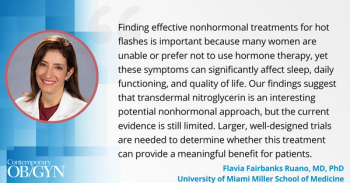
A systematic review found transdermal nitroglycerin may modestly reduce hot flashes, but evidence remains limited.

The FDA approved the first generic of Climara Pro, a weekly estradiol/levonorgestrel patch for VMS and osteoporosis prevention in women with a uterus.

The investigational Evident test requires 3 tumor markers on the same extracellular vesicle to flag early-stage ovarian cancer.

The Menopause Society's 2026 meeting in San Diego will tackle estrogen avoidance, cancer survivorship, mood, and sleep.

SWHR, ACOG, and WFRC called for sustained funding after a new women’s health executive order.

Real-world fezolinetant (Veozah) sleep data help ob-gyns counsel patients hesitant about hormone therapy, according to Marla Shapiro, CM, MDCM.

Cultural upbringing gives context to sexual dysfunction but does not make the diagnosis, according to Sameena Rahman, MD, FACOG.

Experts address COVID-19 vaccine myths, safety evidence, and how to frame the benefits of vaccination in pregnancy.
Experts look ahead to new maternal vaccines and how to counsel patients on receiving several in one pregnancy.
In September, the FDA accepted an extended duration sNDA for the IUD with a decision expected in Q2 2027.
Experts discuss common patient concerns about vaccination in pregnancy and strategies to improve uptake.

ACOG issued its most comprehensive menopause guidance, grading treatments for VMS, sleep, and mood symptoms.
Experts discuss how obstetric and pediatric clinicians can coordinate to protect newborns.
Experts review ACOG's 2026-27 guidance and the RSV window extension for pregnant and postpartum patients.

Soma Mandal, MD, is launching “Mind, Body, & the Pause: the Perimenopause and Beyond Series” on Contemporary OB/GYN, featuring specialists from across Hackensack Meridian Health.

On September 9, 2026, certolizumab pegol received FDA Breakthrough Therapy Designation for APS pregnancy; Jane E. Salmon, MD, reviews the IMPACT trial results behind it.

Psychotherapy addresses fear and anxiety that can blunt hormone and pelvic floor therapy in menopause care, according to Sheryl Kingsberg, PhD.

SUID was the largest single contributor to the Black-White infant mortality gap in 2024 and drove the biggest share of its rise since 2020.

Garima Sharma, MD, outlines validated cardiac risk scores for antenatal screening and the postpartum transitions needed to keep high-risk patients from being lost to follow-up.

Anti-CGRP antibody exposure in early pregnancy was linked to higher spontaneous abortion risk; propranolol was not.
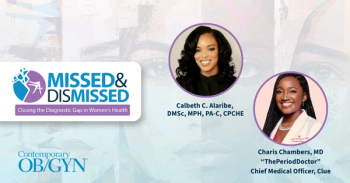
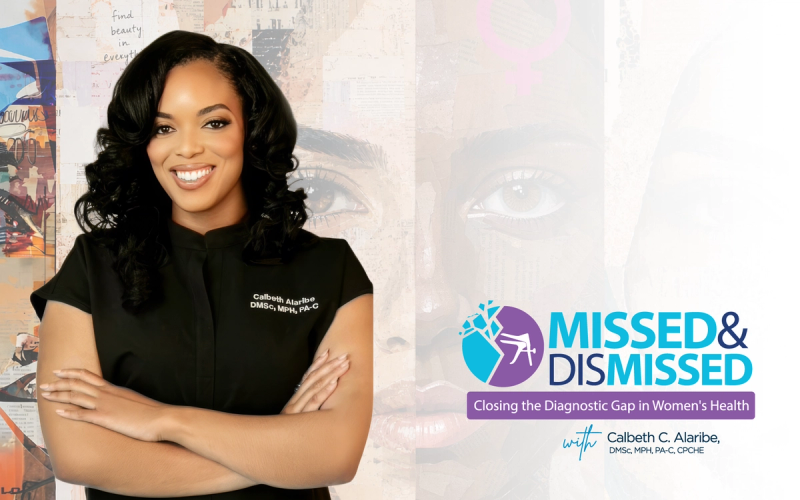
In the debut episode of Missed & Dismissed, Calbeth C. Alaribe, DMSc, MPH, PA-C, CPCHE, talks with Charis Chambers, MD, about PCOS, the push to rename it PMOS, and why diagnostic delays so often begin in adolescence.

Get caught up with Contemporary OB/GYN! This list helps you navigate our top stories from the week, all in one place.

Pritelivir healed all HSV lesions by day 28 in 63% of immunocompromised adults vs 34% with comparators.
Advertisement
Advertisement