
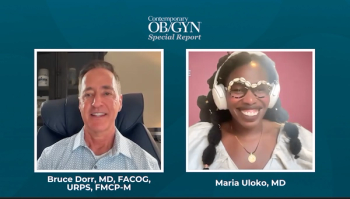
Bruce Dorr, MD, FACOG, URPS, FMCP-M, weighs his own experience with pellet therapy against guideline evidence, then he and Maria Uloko, MD, close with candid advice for clinicians too afraid of hormones to start prescribing.
The inserts, a formulation determined to be bioequivalent and therapeutically equivalent to the reference listed drug Endometrin (progesterone) vaginal inserts, 100 mg, are manufactured by Glenmark Pharmaceuticals Inc.
The FDA has granted final approval to Glenmark Pharmaceuticals Limited for progesterone vaginal inserts, 100 mg, a formulation determined to be bioequivalent and therapeutically equivalent to the reference listed drug Endometrin (progesterone) vaginal inserts, 100 mg, manufactured by Ferring Pharmaceuticals. The product will be distributed in the US by Glenmark Pharmaceuticals Inc, USA.1
“At Glenmark, we remain focused on expanding access to quality and affordable medicines while continuing to strengthen our portfolio in the US,” said Marc Kikuchi, Glenmark President & Business Head, North America, in a news release. “This approval for progesterone vaginal Inserts, 100 mg marks an important addition to our business and reinforces our focus on addressing patient needs in women’s health care.”1
Endometrin was originally approved by the FDA for luteal phase support as part of assisted reproductive technology (ART) treatment in infertile women. It is indicated to support embryo implantation and early pregnancy by supplementation of corpus luteal function.2
Progesterone plays a critical role in ART, as natural progesterone production may be compromised by in vitro fertilization (IVF). Supplementation is considered necessary to adequately prepare the endometrium for implantation and to support early pregnancy. Studies have shown that luteal support with ART can result in increased pregnancy rates, and progesterone supplementation is utilized by nearly all patients undergoing ART.2
Endometrin 100 mg is administered vaginally 2 or 3 times daily using a disposable matched applicator, beginning at oocyte retrieval and continuing for up to 10 weeks. Vaginal absorption of the micronized progesterone insert produces high tissue levels at the endometrium and measurable serum concentrations.2
The original FDA approval of Endometrin was supported by findings from a multicenter, randomized, open-label trial in 1211 women aged 18 to 42 undergoing IVF—described at the time as the largest IVF trial in the world, conducted across 25 US centers. Efficacy was measured by continuing pregnancy and live birth rates. Results pointed to the efficacy of Endometrin, with continuing pregnancy rates of 44% with 3-times-daily dosing and 40% with twice-daily dosing, and live birth rates of 39.7% and 36.5%, respectively.2
In clinical trials, adverse reactions occurring at a rate of 2% or greater included uterine spasm (3% to 4%) and vaginal bleeding (3%). According to Ferring, Endometrin is also expected to carry adverse reactions similar to other progesterone-containing drugs, including breast tenderness, bloating, mood swings, irritability, and drowsiness.2
References
1. Glenmark Pharmaceuticals receives U.S. FDA approval for Progesterone Vaginal Inserts, 100 mg. Glenmark Pharmaceuticals Limited. News release. April 9, 2026. Accessed April 9, 2026. https://www.prnewswire.com/news-releases/glenmark-pharmaceuticals-receives-us-fda-approval-for-progesterone-vaginal-inserts-100-mg-302738154.html
2. FDA approves Ferring Pharmaceuticals’ ENDOMETRIN(R) for luteal phase support in assisted reproductive technology treatment. Ferring Pharmaceuticals. News release. June 22, 2007. Accessed April 9, 2026. https://www.biospace.com/fda-approves-ferring-pharmaceuticals-endometrin-r-for-luteal-phase-support-in-assisted-reproductive-technology-treatment