
Opinion|Videos|December 2, 2024
Nonestrogen Treatments for Menopause
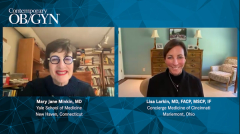
Panelists discuss alternative therapies for women who are not candidates for or choose not to use hormonal therapy, review nonhormonal treatment options recommended by the North American Menopause Society, and explore the growing importance of Level I evidence and consensus opinions in creating a more holistic view of available therapies, both hormonal and nonhormonal.
Advertisement
Episodes in this series
Individualized therapy with shared decision-making is essential when evaluating the risk-benefit profile of hormonal therapy. What are some key considerations for a woman taking hormonal therapy?
- If a woman is not a candidate for hormonal therapy, or elects not to use it, what are some of the therapies/options available to her?
- What nonhormonal therapies are recommended by the North American Menopause Society?
- What is the importance of Level I evidence and consensus opinions?
- Are we moving toward a more holistic view of the evidence for all available therapies (both hormonal and nonhormonal)?
- Which of these are FDA approved?
Advertisement
Related to this article
Bruce Dorr, MD, FACOG, URPS, FMCP-M, weighs his own experience with pellet therapy against guideline evidence, then he and Maria Uloko, MD, close with candid advice for clinicians too afraid of hormones to start prescribing.
Bruce Dorr, MD, FACOG, URPS, FMCP-M, and Maria Uloko, MD, walk through real-world dosing, cost workarounds, and the labs that actually matter for safety and efficacy.
Bruce Dorr, MD, FACOG, URPS, FMCP-M, and Maria Uloko, MD, reframe testosterone candidacy around clinical presentation and hormone state, not age cutoffs or a single number on a chart.
Before prescribing testosterone, know what the evidence actually proves. Maria Uloko, MD, draws a sharp line between the one population the data supports and the much wider group of women asking about it.

Drawing on her own successful version, Amber Watters, MD, welcomes the ASA's push for closer obstetrics and anesthesia collaboration.

David Shalowitz, MD, MSHP, emphasizes spreading awareness of opportunistic salpingectomy across specialties while grounding its use in shared decision-making.

SMFM states abortion care is core to MFM practice and urges institutional action to protect high-risk patient access.
Hugh Taylor, MD, welcomes ACOG's new guidance allowing clinical, nonsurgical diagnosis of endometriosis and emphasizes it is a systemic disease affecting the whole body.
Advertisement
Advertisement
Trending on Contemporary OB/GYN
1
SMFM: Managing high-risk pregnancies amid abortion care restrictions
2
Pellet therapy and practical advice for hesitant prescribers
3
Reviewing the evidence about testosterone in women
4
FDA accepts extended duration sNDA for MIUDELLA IUD
5