




A head-to-head comparison of salpingotomy and salpingectomy finds that removing the affected tube after an ectopic pregnancy doesn’t affect fertility as expected.
A head-to-head comparison of salpingotomy and salpingectomy finds that removing the affected tube after an ectopic pregnancy doesn’t affect fertility as expected.
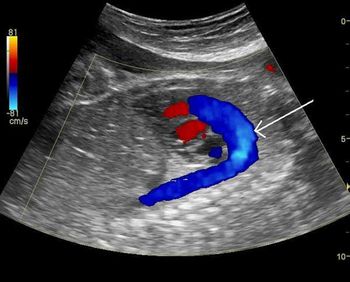
Challenge your diagnostic skills: Can you identify this structure in the fetal thorax?
Physicians’ groups are urging ob/gyns to have difficult conversations with obese women about their weight. Here’s one example of how utter bluntness can be an effective tactic.
Exercise during pregnancy prevented excessive gestational weight gain, but the benefit of the intervention was not observed in the groups most at risk.
Maybe that one glass of wine isn’t so harmless. New research suggests that even small amounts of alcohol in the first trimester can increase the risk of adverse outcomes.
Although causality was not established, ADHD and other behavioral disorders were more likely to be diagnosed in children of women who used acetaminophen during pregnancy.
According to a new study in Tobacco Control, women exposed to secondhand smoking (SHS), particularly those with no history of smoking, have a higher risk of spontaneous abortions, ectopic pregnancies, and stillbirths than women with no such exposure.
A striking number of sexually active women experience reproductive coercion by their male partners, and their ability to use contraception and plan pregnancies may be compromised.
An iliac artery rupture results in a patient's death. Was it caused by the cesarean delivery, the patient’s disease process, or the care she received following her delivery?
New study findings have revealed that only about a third of women of childbearing age take folic acid regularly, revealing that health policy alone does not work.
Hourly titrated oral misoprostol provides a steady-state drug level and is an effective substitute for dinoprostone vaginal insert, new research shows.
Of the 8 cases of listeriosis that have been confirmed in this latest outbreak, 5 of the cases were related to pregnancy, underscoring the importance of food safety in pregnant women.
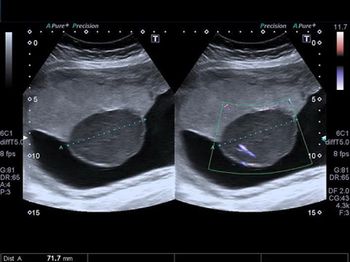
What abnormality of the placenta is affecting this late second-trimester pregnancy?
Women who have had bariatric surgery require special care during pregnancy, particularly with assessment of micronutrient deficiencies and appropriate replacement. Here’s one ob/gyn’s approach.
Lifestyle advice, including diet and exercise information, can reduce the number of infants who are born weighing more than 4 kg (8.8 lb) among overweight and obese pregnant women, research shows.
New guidelines for the prevention of venous thromboembolism (VTE) in obstetrical patients have been released. Provided here is an overview of the guidelines and tips on how to implement them.
Pregnant women who require dialysis have healthier babies and fewer pregnancy complications when they receive dialysis for more than 36 hours per week, researchers report.
Evidence shows that continuing professional education and structured internal audit can both reduce levels of obstetrical interventions and improve outcomes for mothers and babies.
Rates of cesarean delivery have risen, and with them, interest in determining what influence-if any-progress and management of labor have on the uptick. A retrospective chart review presented at the 34th Annual Meeting of the Society for Maternal-Fetal Medicine: The Pregnancy Meeting suggests that labor curves are unchanged and a better understanding of labor management is needed to reverse the cesarean trend.
“Term” delivery is defined as 39 weeks 0 days, according to the American College of Obstetricians and Gynecologists. For women with repeat cesareans, that timing may not result in the best outcomes, say investigators from the University of Texas Medical School at Houston.
New research presented at The Pregnancy Meeting™ last week in New Orleans shows that noninvasive prenatal testing can detect more than 80% of chromosomal abnormalities.
In women with late preterm hypertensive disorders of pregnancy, immediate delivery did not decrease the risk of severe adverse maternal outcomes but did increase the risk of neonatal RDS, unlike with expectant monitoring.
The effectiveness of remifentanil patient-controlled analgesia is not equivalent to that of epidural analgesia for pain relief during labor, study finds.
Obesity during pregnancy is an independent risk factor for long-term cardiovascular morbidity, and these complications tend to occur at a younger age, researchers found.